Authors: Kellen Kanyunyuzi & Johnstone Baguma
1. Introduction
Over the past three years we have spent on ground engaging Uganda’s emerging cities, we have realized that they face the dual challenge of rapid growth and high expectations for service delivery. Decisions must be timely, informed, and accountable. Yet much of city decision-making has been relying on fragmented or incomplete data resources. Recognizing this, the DataCities initiative stepped in to support Fort Portal and Jinja cities to build strong, sustainable data governance systems that organize data and gradually enable evidence-informed decision and policymaking.
2. From Challenge to Opportunity
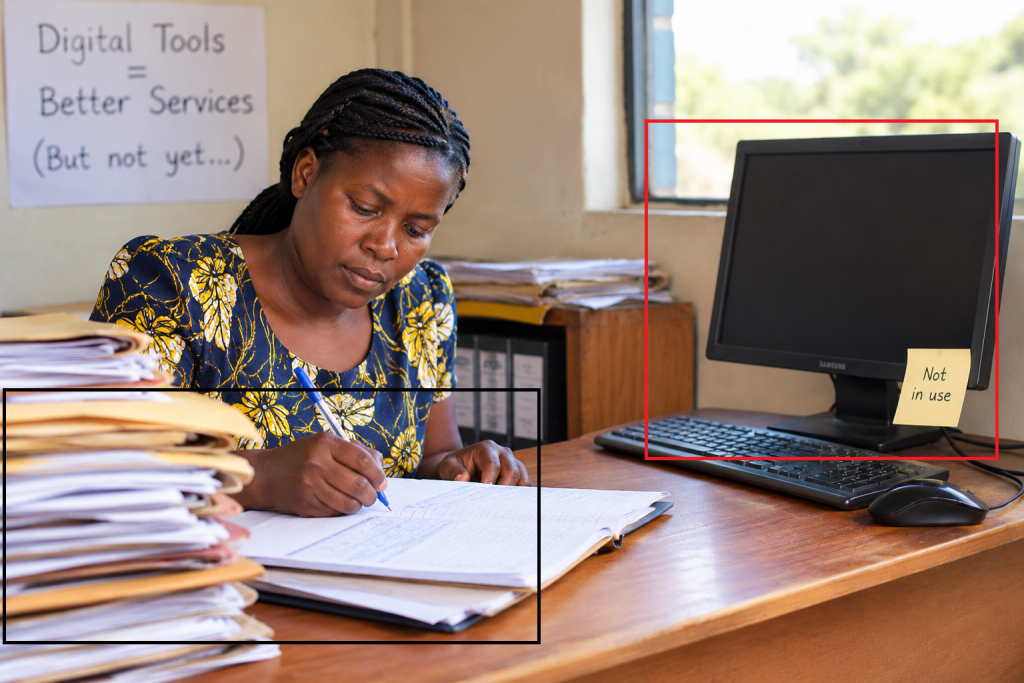
In 2023, the baseline report revealed a stark reality: city departments often operated in silos, digital technical capacity was limited, and governance structures for data management were weak or absent in many instances, both in Jinja and Fort Portal cities. Routine decision making and policy formulation in sectors like tourism, waste management, and revenue were frequently made without reliable data and evidence, slowing the growth development of such sectors and reducing public trust.
The DataCities Consortium (ToroDev-ODA, Sunbird AI and UNGP) within its eight years’ program recognizes that effective urban data governance is not just about technology; it is also about people, structures, digitalization processes and tools working together, in order to build a sustainable smart city model. To address these gaps, the initiative has helped to establish a multi-layered urban data governance framework tailored to each city’s needs, laying the foundation for improved data and evidence use for improved decision and policy-making.
3. Building Structures That Work
Initially, both emerging cities formed Data Steering Committees composed of department heads, political leadership representatives, and members of the City Development Forum (the citizens/residents’ voice). While inclusive, these committees of about 15 members each struggled to coordinate data and evidence processes effectively, and policy and decision-making often stalled.
To create a more agile system, a Data Quality Assurance Team was also formed. This smaller, focused group includes the city administrator, IT staff, city planner, statistician, monitoring and evaluation officers, and heads of DataCities focus departments of revenue, tourism, and waste management.
This team serves as the operational engine for city data governance, progressively managing daily operations, improving data quality through standardization of data management processes, leading to improved evidence informed policy and decision-making.
“For the first time, our planners can access reliable data that guides our budget allocation and service planning,” once said the city statistician of Jinja City, when asked to comment of the relevance of the Data Steering and Data Quality Assurance Committees.
4. Defining Roles and Responsibilities
Clarity in roles is central to strengthening urban data governance. The initiative introduced responsibilities for data custodians, administrators, regulatory, and users. Data custodians manage secure storage and privacy compliance, administrators maintain systems and databases, regulatory adherence to compliance frameworks, and data users’ city leaders and planners apply the information to support decisions. By defining these roles, cities have begun to reduce duplication, improving data and evidence coordination, and ensuring that data increasingly flows from collection to practical use around all city departments.
5. Lessons and Impact
The experience in Fort Portal and Jinja cities highlights how structured approaches to urban data governance can gradually transform city operations to improvement. Whereas a larger city data oversight (steering) committee is ideal to steward, influence and coordinate a data and evidence use revolution in- an emerging city context, the creation of smaller technical operational teams has been hands-on, by harvested “low-hanging fruits” in data and evidence use, leading to improved city operations efficiency. This is evidenced especially in local revenue mobilization (shift in decisions and policy on evidence informed tax rating for properties, trading license and street-parking contracting), waste management (development of KPIs, design of a SafiSiti data platform anddigitizing register of city waste producers) and tourism development (enacting of guidelines, profiling of sites, etc). Enactment of Protocols, guidelines, KPIs and roles’ clarity have enhanced accountability through data quality assurance oversight, while ongoing capacity-building initiatives are strengtheningtechnical skills to analyze and present data as evidence at all levels for improving city operations. Cross-department collaboration due to increased data appreciation and coordination is slowly breaking down silos, fostering better communication and teamwork.
“We are beginning to see the impact of organized, reliable data in the way we plan, monitor, and deliver city services,” notes the Fort Portal City Assistant City Clerk.
6. A Vision for the Future
Fort Portal and Jinja cities are actively integrating these data governance frameworks into their five-year statistical/data strategic plans, taking steps to embed sustainable data practices into medium long-term growth strategies. DataCities Consortium is delighted to be supporting this process between
September and October 2025.
While challenges remain, particularly in fully embedding these practices across all departments and strengthening technical data science capacity and evidence use appreciation, the preliminary results so far show that step-by-step incremental, well-planned efforts can yield meaningful improvements.
7. Our Commitment in the next couple of years
ToroDev-ODA and its partners in the DataCities Consortium remain committed to strengthening data governance systems, enhancing capacity, and fostering a culture of evidence-based decision and policy-making in Uganda’s emerging cities. The progress in Fort Portal and Jinja cities demonstrates that even modest investments in data governance can deliver transformative results improving planning, service delivery, and accountability, as these urban jurisdictions model their future as smart cities. But the journey is just beginning – e invite development partners, funders, and civic organizations to join us in scaling this interesting work nationwide, regionally and at continental level. By investing in city data systems, capacity-building, and evidence-driven planning, together we can ensure that Uganda’s and Africa’s emerging cities grow smarter, more inclusive, and more sustainable.