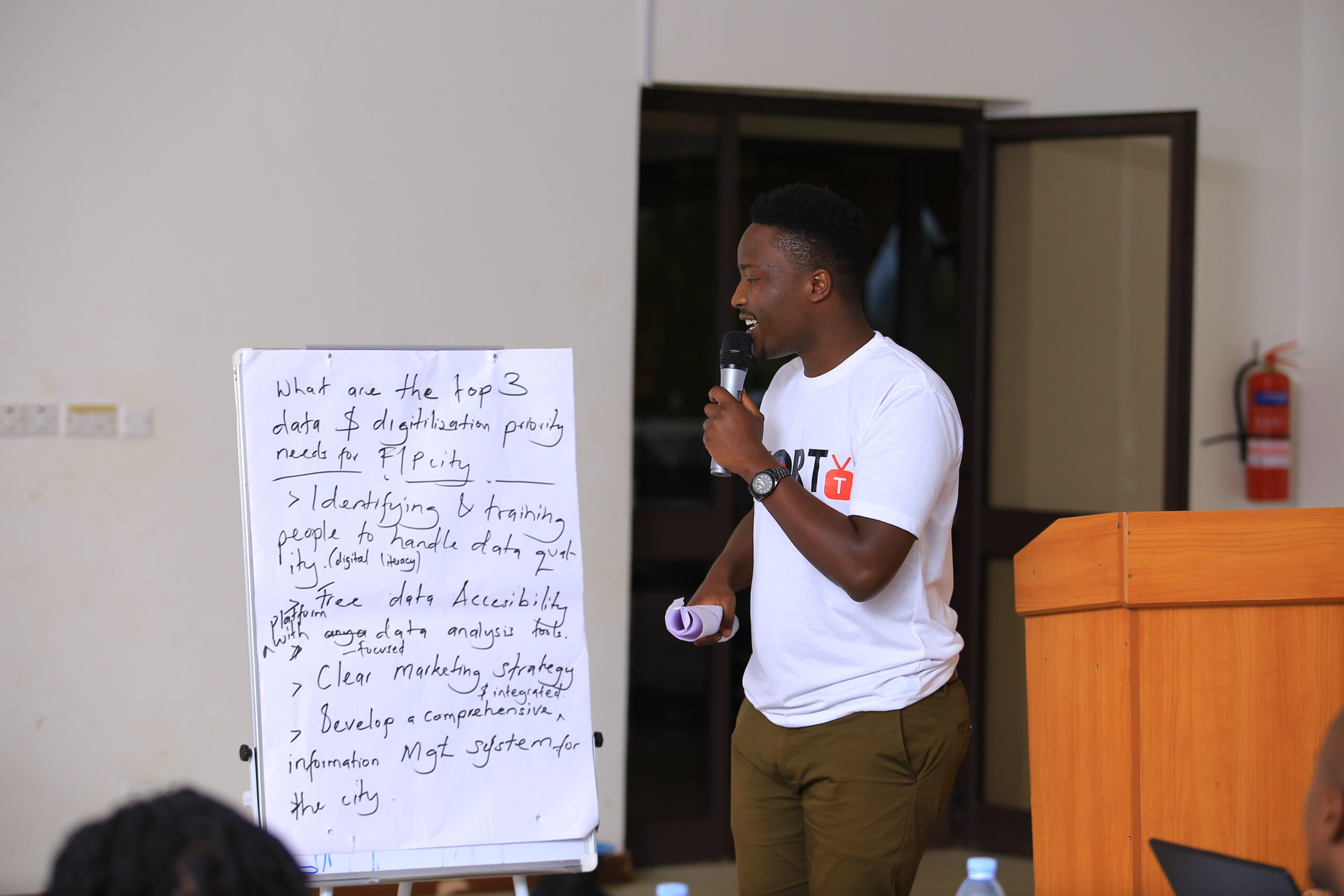
This month, we continue to reflect on the on-going DataCities Initiatives’ work in Uganda’s secondary cities of Jinja and Fort Portal. We zoom into the role of stakeholders’ engagement and participation as one of the key determinants of sustainability of smart city initiatives in resource constrained cities. Smart Cities are powered by urban data and artificial intelligence (AI) technologies. The discussion of data and AI is like that of a chicken and an egg! Although differentiated, they depend on each other for one to derive meaningful impact in a complex urban jurisdiction.
Several urban data and AI governance models have been recently devised by scholars and professionals in the field. Examples are the Urban Data Governance Reference Model of Bozkurt et al (2025), the Smart City Framework of UN Habitat (2023), CNA’s AI Maturity Model for Government Agencies (2025) and others. Stakeholders’ engagement and participation is mentioned, but there is a shortage of first-hand experience from the field on the consequences of such engagements, especially in the context of African cities. The DataCities Initiative in Uganda’s Jinja and Fort Portal Cities is currently co-creating the empirical knowledge and/or experience to guide practitioners in this field that is steadily emerging.
Stakeholders form values, principles and ethics of smart city initiatives. As influential members of the wider urban community, they come with assumptions and norms they hold dear, that define a specific city’s socio-economic context. This later guides the behaviour, attitudes and incentives to improve urban data use culture, assign data governance and management duties by city authorities, enact rules and guidelines to address inequalities and other inclusivity issues caused by digital data generation (IoT tools) and algorithm biases. We will expound on this more in our next articles.
Stakeholders have potentials to contribute to fiscal and fiducial requirements for sustaining smart city initiatives. Many existing models fall short of mainstreaming a discussion on fiscal and fiducial aspects in urban data and AI governance (smart city) initiatives. For African resource-constrained cities, this is an important issue. Such urban authorities grapple with inadequate digital infrastructure, which is so costly to improve and, therefore, need to be planned for well. They also struggle with proprietary digital tools which siphon their limited financial resources until such cities are no longer able to sustain them, leading to collapse of smart city initiatives. Moreover, external stakeholders if not engaged well, may come with fancy, expensive urban data and AI project pilots, which phase out after they have left, due to the cities’ financial sustainability challenges. The DataCities Initiative is addressing this issue. In Fort Portal city, data analytics on existing datasets, use of satellite imagery and GIS data to automate property tax and engage property investors through the city’s IRAS system is contributing to increase the city’s local revenue. In turn, a portion can be self-funded to further develop urban data and AI capabilities. In Jinja City where industrialists and/or investors gathered to discuss how to resource the SafiSiti Smart Waste Management System (since they are one of the major groups that produce tonnes of urban waste) is a case to watch. In a nutshell, fiscal focus guides how the city’s data and AI technologies are funded/budgeted for, valued and procured, while fiduciary aspects contribute to developing public and/or stakeholders’ trust to invest in smart city initiatives.
Stakeholders can influence organisational structuring of smart city initiatives in urban authorities. The need for designated data governance and management champions, data quality assurance committees, smart city modelling leaders and units to guide strategy formulation, implementation and review. This specific influence of stakeholders’ participation will be discussed in our next article.